
Florence County Busted Mugshots Explained
A mugshot comes from booking. Deputies snap it when they process someone into Florence County custody. The Sheriff's Office handles that intake. People awaiting release or transfer usually sit at the Florence County Detention Center. The paperwork pulls together a name, a booking date, the charges filed, custody status, and later court events.
So where do busted mugshots from Florence County actually surface? Start with the sheriff's live Inmate Search feed. Its person cards include booking-photo thumbnails for current detainees. Someone missing from that screen may have been released, moved, or simply not displayed. That absence proves little on its own. It never substitutes for a court docket or a written request to the agency holding the file.
Florence County Booking Record Details
First, figure out which record you need. A live roster card answers one narrow question: is this person in custody right now? A booking document holds the details captured at intake. An incident report covers the police event behind the arrest. A court docket then tracks the case forward. The FCSO feed and detention portal publish public-facing screens. Neither publishes a permanent field dictionary, though. So treat the field categories here as a practical map, not a promise that any single screen shows everything.
| Field | What it helps identify |
|---|---|
| Name and identifiers | The person whose county-custody record is being checked. |
| Booking date or intake information | When to use the released portal's limited day window or narrow a records request. |
| Charge information | An charge at booking, which can differ from a later filing or outcome. |
| Custody or release status | Whether the live roster, released search, court, or records route is the next step. |
| Bond and court detail, where shown | Initial custody context, not a final disposition. |
| Booking photograph, where shown | An identification image on the current official feed, not a gallery or proof of guilt. |
Booking is the intake step right after an arrest. Bond is a court-set condition for release. Disposition is how the case eventually ends. Keeping these three straight makes any Florence County record far easier to read, and it keeps you from reading a temporary custody screen as a final outcome.
Request Florence County Busted Records
Older booking documents, or photos missing from the live tools, go through the sheriff's FOIA and NextRequest route. FCSO does keep a Records Unit inside its public-information structure. The public request page omits any set price for a booking photo or copies. Ask for a written estimate instead of guessing at the rate. South Carolina's public-records law lets agencies bill permitted actual costs and sometimes require a deposit.
- Identify the person and give any known booking date, case number, booking number, or arresting agency.
- State the record sought, such as a booking sheet, detention log, booking photograph, or incident report. These are not interchangeable records.
- Submit the request through FCSO's official portal and retain the confirmation and any estimate.
- If the issue is a case outcome, also use the Florence County court route instead of asking a roster to answer a legal question.
Florence County Sheriff's Office
6719 Friendfield Road
Effingham, SC 29541
Non-emergency: 843-665-2121
Detention Center: 843-665-9944
Publicly posted hours: Monday-Friday, 8:30 a.m.-5:00 p.m. EST
Timing depends on the record's age. Records two years old or newer get a written determination within 10 business days. Older ones take 20. Once an agency decides records are available, production follows a 30 or 35 calendar-day schedule, still subject to exemptions and lawful redaction. For the full framework, read the Florence County FOIA statement and the state FOIA text. Neither promises a specific photo exists or can be released.
South Carolina Mugshot Record Rules
South Carolina's FOIA covers inspection, copying, or electronic delivery of public records, exemptions included. It never forces an agency to build a record that was never created. There is a practical Florence County wrinkle too. The live feed only shows who is in custody now. Public availability shifts with release, transfer, privacy limits, sealing, or a court order. A brief online window tells you nothing about retention.
S.C. Code § 17-1-60 governs commercial publication of South Carolina arrest and booking material, mugshots included. Under its terms, a non-government publisher cannot demand payment or other consideration to remove or revise a listing. A qualifying statutory request has strict requirements. Certified mail, documentation, identifying arrest details, and the exact online location. The statute's 30-day provision is not a blanket promise, particularly where its conditions go unmet or a revision rather than a removal applies.
Expungement works differently, under § 17-1-40, and eligibility turns on the specific facts. The official South Carolina Judicial Branch expungement process points people to the right court and solicitor route. Get the court result first. Then pursue the proper court process or an agency correction. A dismissal, by itself, does not instantly wipe every online copy.
Several secondary publishers run their own no-cost correction channels. Examples include BustedNewspaper's listing form and RecentlyBooked's published policy. These are third-party procedures, not government records. They are no substitute for a court order or an FCSO correction request. Save the original URL and any supporting documents. Once the source page changes, use the relevant search engine's current outdated-content process. And steer clear of anyone demanding payment for deletion.
Note: Sealed or expunged records carry access limits that no public custody search can override.
Finding Florence County Busted Mugshots
Florence County splits its official detention tools into two parts. Check the visual current feed first if the person might still be held. Then try the detention portal's released option. That one covers a short recent window. Working that order beats trusting a search-result snippet as if it were a live jail record. If both routes come up empty, move on to a records request or a court case search, whichever fits the information you need.
- Check the FCSO current Inmate Search for a live county-custody card and its official photo display.
- Use the released-inmate portal when the person may have left county custody. Choose one to four days and search by the available name or charge controls.
- For a later state-prison sentence, use the SCDC inmate search. For a federal or immigration custody question, use the separate federal locator that matches that system.
- Check the court case path for the proceeding and its outcome. Request an existing FCSO record if the public detention tools do not provide the needed booking material.
Want notice of a booking? The Florence County Sheriff (SC) app works as one official channel, though its live features shift over time. South Carolina VINE offers similar alerts for custody changes. Treat both as helpful nudges. For who is actually in the jail right now, the county roster still wins, and the court file is where case outcomes live.
Florence County Custody Photo Channels
Different sources answer different questions. FCSO covers county custody best, while the South Carolina Department of Corrections handles the later state-prison stage. Court records settle legal questions. The channels below rank by authority, not by how long content lingers online.
| Channel | Photo or record scope | How to use it |
|---|---|---|
| FCSO current feed | Current county-custody cards with visible booking-photo thumbnails. | Use it first for an active detention check. |
| FCSO detention portal | Current or released search with a one-to-four-day control. | Use the released mode for the verified short recent window. |
| FCSO records route | Existing booking documents or images subject to law and redaction. | Request the precise record and ask for an estimate. |
| SCDC inmate search | Current state-prison custody and an offender photo where shown. | Use only after a state sentence and SCDC placement. |
| Court case records | Case progression and a public disposition, not a detention photo. | Use the Judicial Branch Florence gateway. |
FCSO's official current feed appears in this interface capture. Think of it as a working county-custody search rather than a gallery or permanent archive of busted mugshots.
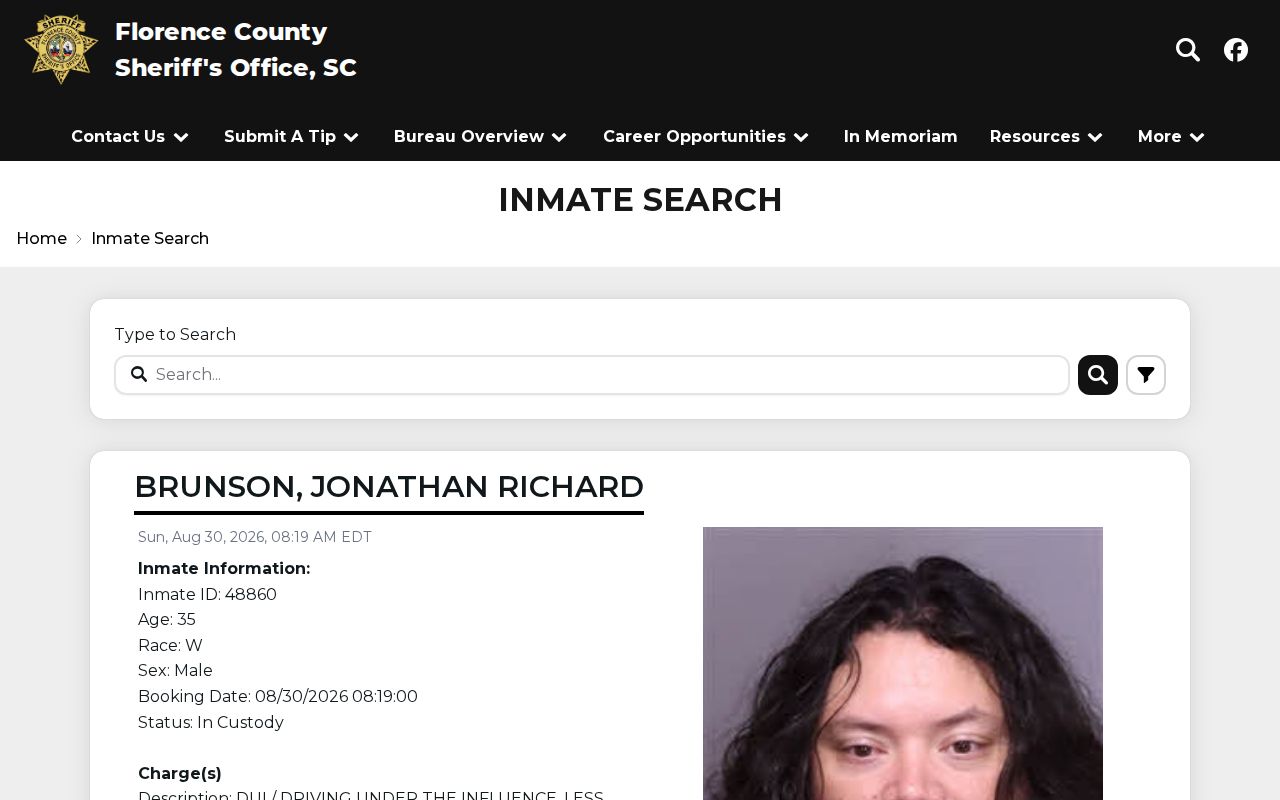
The live source controls the current status. A card can vanish after release or transfer, so older matters call for the released search, the records route, or the court file. Several secondary sites also carry Florence County booking photos: BustedNewspaper, RecentlyBooked, Arrests.org, and Mugshots.zone. None of them belong to FCSO or the courts. Their timing and completeness vary widely, so confirm anything you find there against the official channels.
Busted Bookings at Florence County Jail
The FCSO current feed is photo-driven and visual. Its booking portal, by contrast, is all forms. You can search by name or charge description, switch between current and released modes, and limit results to the last few days. That window caps at four days. FCSO posts no refresh schedule and no stated retention period for public photos. That matters. A current screen is not a historical database, so older bookings need the records route instead.
| Portal control | Florence County use |
|---|---|
| Current feed | Visual official first check for a person presently listed in county custody. |
| Name search | Use known spelling in the detention portal. |
| Charge description | Use the portal's available wording to narrow a search. |
| Released mode | Use for the short recent or released search, with one to four days. |
| All-inmate option | Use within the portal's own available mode and filters. |
Start with the official feed. Then try the short released mode. If the booking is older, request a record from FCSO. A court file belongs in that sequence too, since it shows what happened after booking. The sheriff's press releases are worth a look, but keep in mind they are chosen agency stories, not a complete arrest feed.
Florence County Recent Booking Windows
No verified FCSO page works as a daily arrest log. The closest official option is the detention portal's day-window search. Two views exist. The current feed answers a present-custody question, and the released portal covers a one-to-four-day stretch. Each serves a different slice of the detention system, so the two may show different public details.
Be careful with the word "recent." The interface accepts up to four days. It does not label day ranges as separate feeds, and no rolling-hour schedule is published. A weekend booking cannot be promised by any certain hour. Older booking records fall back to FCSO's records route. Later case outcomes belong to the court system.
Note: A short released-search window is not the same as the agency's internal records-retention period.
Busted Florence County Alerts and App
The Florence County Sheriff (SC) app is one supplemental notice channel among several. FCSO posts press releases too. It runs an active-warrants interface, and its public site links a Submit A Tip function. Each serves a different purpose. An alert is useful when it sends you back to a live county record, but it is not a full arrest history or a copy of the roster. For custody-status notifications, South Carolina VINE is the strongest state-supported route documented for Florence County. Pick the right jurisdiction and facility there. Then return to FCSO for the actual roster or released search. Lake City's Notify Me service sends police notices, and Timmonsville's police page links official social messaging. Neither city channel is an individual custody search. Neither stands in for the Florence County Detention Center system.
Question: Can an alert answer a court question? Answer: No. Alerts and agency news may describe a custody event. The Judicial Branch case path is the right source for a later public case result.
Florence County Booking Fees and Retention
What does a booking photo cost from the sheriff? FCSO's public request page names the official intake route but lists no price. Ask for a written estimate before you commit. The City of Florence is more open about its own fees: $0.35 per paper copy, plus search, retrieval, and redaction work billed from $20 an hour, with a possible 25% deposit. SCDC keeps a separate rate sheet for state records. Neither schedule binds the other. A city fee tells you nothing about FCSO's charge, and a state rate never sets the price of a county detention record.
Retention is murkier. FCSO posts no current online retention period for the visual feed or the short released-inmate window. The SCDAH general records schedule offers helpful series guidance, but the county could run on an approved agency-specific schedule instead. So name the series you want, booking sheet, detention log, intake material, photo, or incident report, and ask which schedule governs it. One caution: a card vanishing from the portal does not mean the underlying record was destroyed.
For old cases, go where the history lives. The Clerk of Court and the Judicial Branch carry docket material, while SCDC and the state archives hold only the limited state-agency records they actually keep. Sealed or expunged files stay under the court and access rules that apply to them.
Florence County State Prison Photos
Prison photos and booking photos come from two different worlds. The South Carolina Department of Corrections inmate search covers people already sentenced and housed in state custody, not someone freshly busted in Florence County. It can show a public offender photo and identifying details for that later stage. SCDC's internal photo-refresh policy guarantees nothing about county images or complete listings.
Use the right tool for the question. When you want to know whether someone sits in the Florence County Detention Center, the FCSO roster is the source, never the state search. For state-prison custody, the official SCDC interface applies. SCDC explains the inmate-search limits in its own reference material.
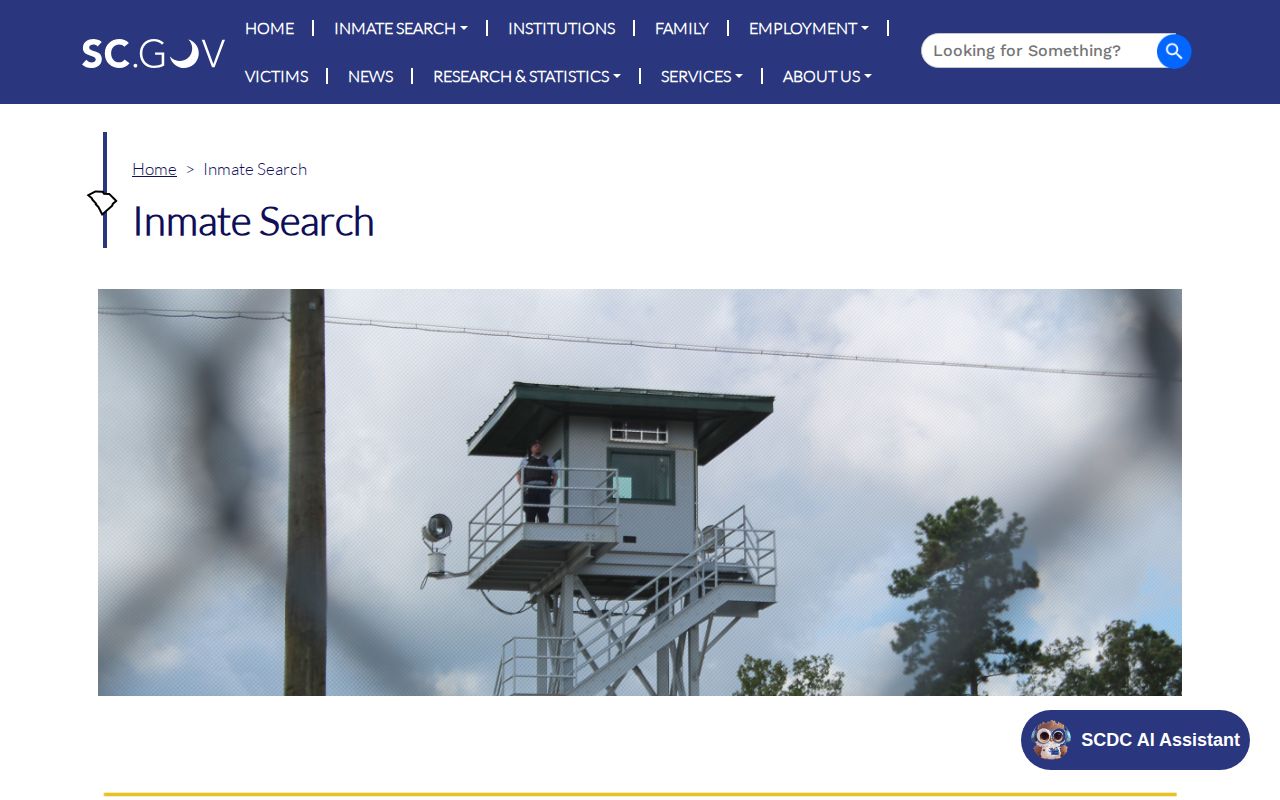
Save the state system for the end of the road. Turn to it only after county and court routes point to state-prison custody as the real question.
Florence County Court Records After Booking
A booking is just the start of the story; the court record tells the rest. The South Carolina Judicial Branch Florence County page links the 12th Judicial Circuit, the Clerk of Court, court rosters, and case-record search. Florence County Magistrate offices include a full-time jail office plus local offices in Lake City and Timmonsville, which can matter for early court or bond context. For an outcome, read the court record itself. A roster entry will never give you one.
Question: What if a person is not on the roster but appeared there before? Answer: Release or a transfer is the usual reason. That fact alone explains nothing about a charge. Check the released portal during its short official window, then follow the court route or a documented records request.
The Florence court gateway points to case and court-roster resources rather than a county booking-photo archive.
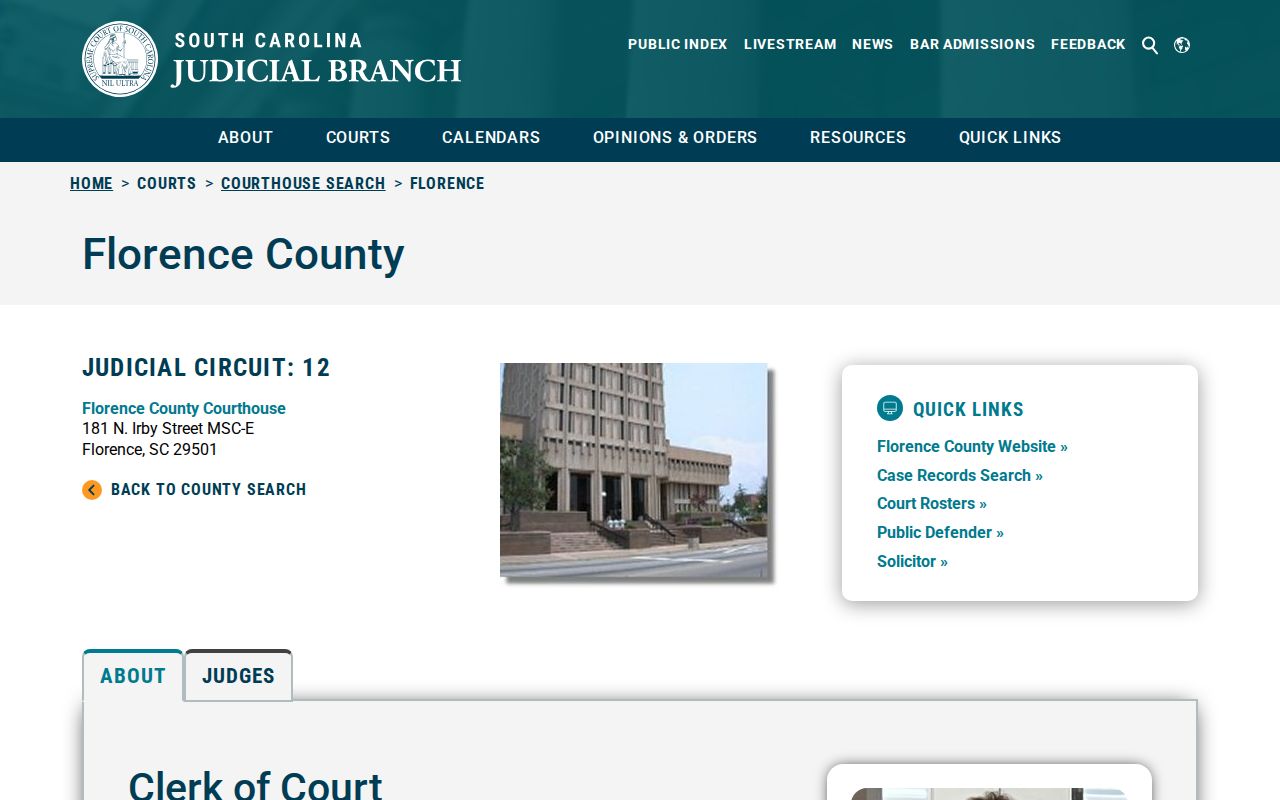
The court result is the record worth consulting when an arrest needs its later legal context.
Busted Mugshots Across Florence Cities
Florence County's three leading incorporated places run their own police-record routes. But when someone is booked or held in county detention, the trail still leads back to FCSO. Municipal police pages and local notices are not a county roster. Never confuse the two. The city pages keep those differences in view.
- Florence Busted Mugshots: Florence Police reports use the city FOIA route, while county-custody checks use FCSO.
- Lake City Busted Mugshots: LCPD has a city records route and no verified public daily arrest log.
- Timmonsville Busted Mugshots: TPD's official notices are not a searchable booking roster; FCSO is the county-custody path when applicable.
For historic material, start with the custodian. The state archives hold some old SCDC series, not a digital vault of current Florence County booking photographs. Ask FCSO which record series and retention schedule apply before assuming a missing public page means destruction.